Argus™ turns a question into an investigation your team can follow.
Operating within TrueQi®, Argus™ directs inquiry across connected evidence, modeling, and environmental context. It organizes findings and links the work to supporting evidence and model outputs so qualified people can review it.
Advanced reasoning and system operation within TrueQi®.
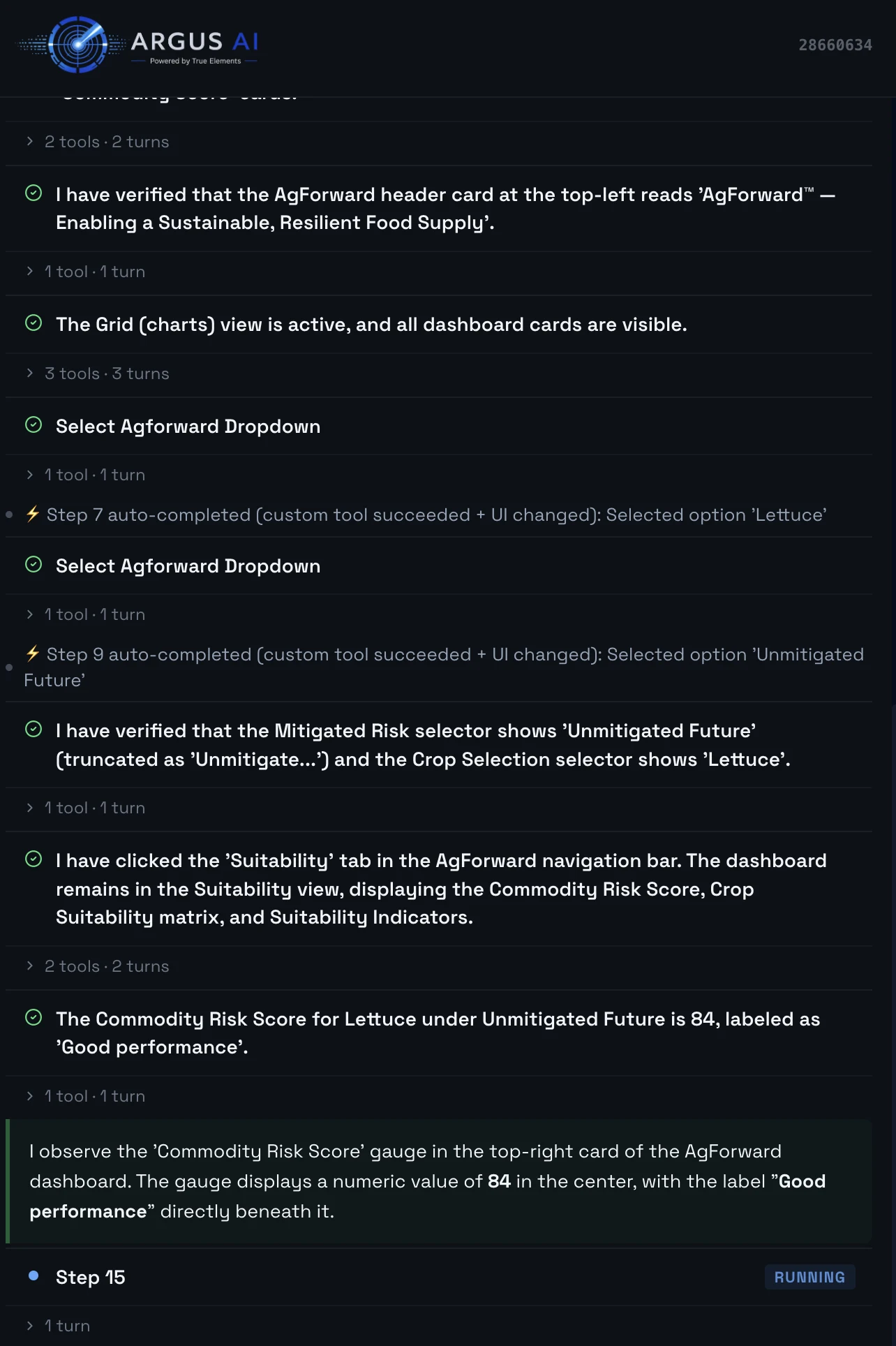
It does more than generate an answer. It directs the work required to investigate one.
A consequential water question rarely depends on one source, one model, or one discipline. Argus™ works within the context TrueQi® constructs to direct the investigation across relevant evidence, tools, modeled relationships, and environmental conditions.
Argus™ does not become the source of truth. It helps the team examine what supports a finding, what assumptions shape it, what remains uncertain, and where qualified review is required.
Direct the investigation
Determine which available evidence, tools, models, and relationships should be examined for the question.
Organize the findings
Structure what the investigation reveals so the team can understand the relationships and implications.
Keep the work reviewable
Link findings to supporting evidence and model outputs so qualified people can examine the basis of the work.
The question leads. Argus™ directs what the system investigates next.
Frame the question
Define the place, asset, portfolio, community, supply chain, or water system the team needs to understand.
Examine the TrueQi® context
Work from the connected evidence, relationships, assumptions, and boundaries assembled around the question.
Direct the appropriate capabilities
Apply relevant tools, modeling, and environmental analysis to investigate the issue.
Organize the findings
Bring the resulting evidence and implications into a coherent investigation record.
Return the work for review
Keep supporting evidence and model outputs available so qualified people can evaluate what the organization should do.
Follow the investigation from the question to the organized evidence.
Define the investigation
Begin with the question and the operating context the team needs Argus™ to examine.

Follow the work
See Argus™ direct tools and analysis across the connected TrueQi® context.
Review the organized findings
Examine the resulting findings with the supporting evidence and model outputs available for qualified review.
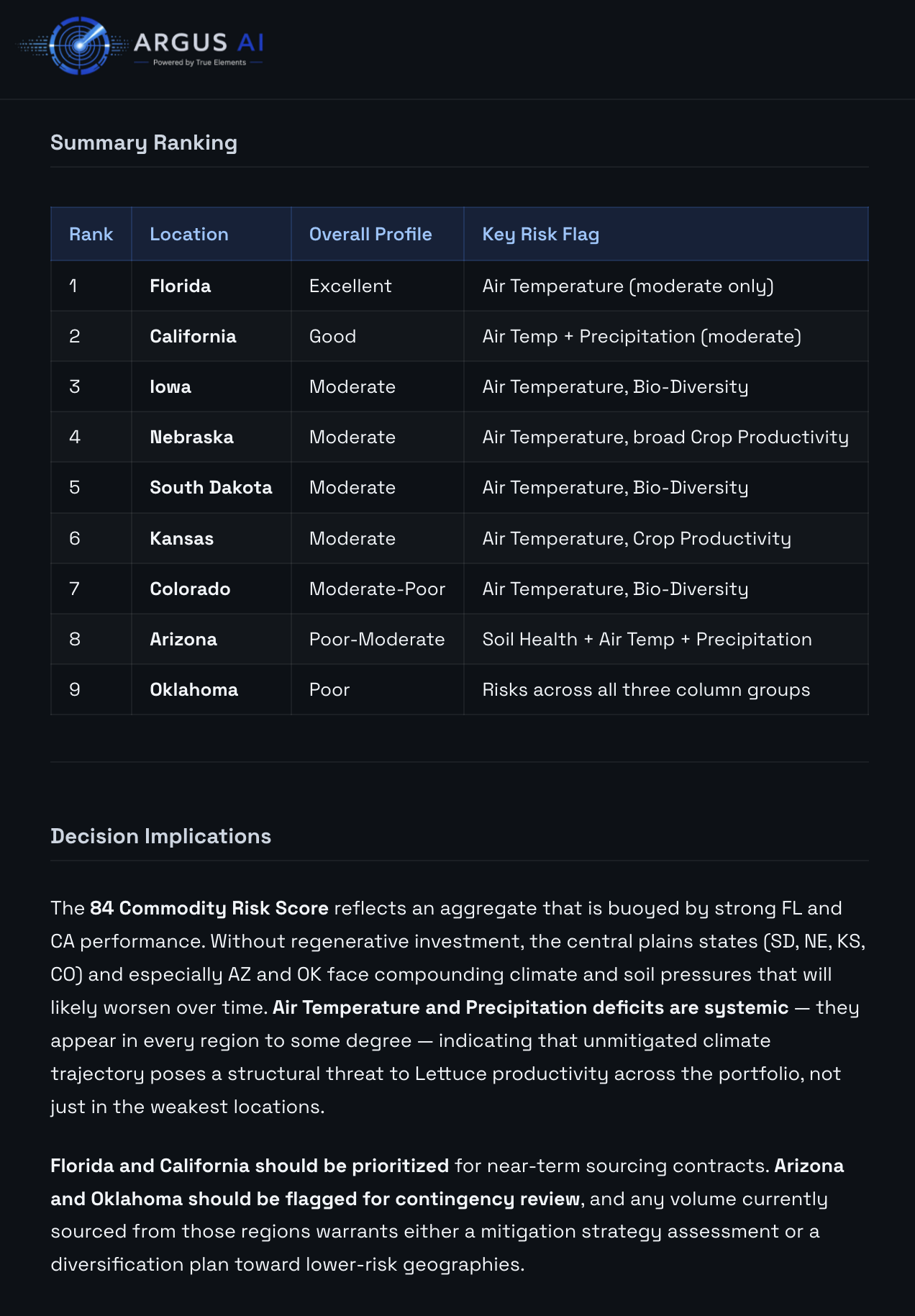
Evidence limitation: Interface evidence is shown for demonstration. Visible scenarios, values, dates, and system states must be reviewed against their supporting sources and context before use.
Reasoning is useful when its basis and boundaries remain visible.
Evidence context
Findings remain connected to the sources, dates, geography, and reporting context available to the investigation.
Model context
Relevant model outputs, assumptions, and limitations remain part of the reviewable record.
Uncertainty and gaps
Incomplete, conflicting, or changing evidence should be identified for further review, not hidden behind a confident answer.
Human responsibility
Qualified people determine whether the evidence is sufficient and the organization decides what action to take.
Argus™ operates inside the context TrueQi® constructs.
Data Foundation
Preserves provenance, continuity, and trust.
Data Constellation
Connects environmental evidence by place, time, and relationship.
Physics-informed modeling
Examines the physical relationships relevant to the question.
Integrated environmental science
Examines environmental conditions and relationships in context.
Argus™
Advanced reasoning and system operation that directs the investigation across that context.
Reviews the evidence and findings, then decides and acts.
The investigation changes with the question. The role of Argus™ remains the same.
Data Centers
Investigate site, infrastructure, water, energy, and long-term operating questions in connected context.
Agriculture & Food
Investigate water, land, weather, production, and supply relationships across farms and food systems.
Finance & Investment
Carry connected water and environmental evidence from assets into issuer, portfolio, and investment analysis.
Government & Infrastructure
Investigate connected water, infrastructure, community, policy, and jurisdictional questions.
Corporate Sustainability, Resilience & Supply Chain
Investigate water dependencies and changing conditions across operations, assets, suppliers, and commitments.
Consultancy & Advisory
Help expert teams investigate client questions while preserving the evidence and context behind their judgment.
What teams need to know about Argus™.
Bring us the question your organization needs to investigate.
We’ll show you how Argus™ can direct the investigation within TrueQi® while keeping the supporting context available for your team to review.
Request a Briefing